
Getting Started
Bringing a new product to market is often portrayed as a creative exercise but successful products are rarely the result of creativity alone. In reality, they are the outcome of sound engineering, rigorous testing, intelligent manufacturing decisions and a thorough understanding of production constraints.
Many promising concepts fail not because the idea is poor but because manufacturability, quality control, material selection and production economics are considered too late in the process.
Whether you are developing an industrial component, medical device housing, automotive assembly or consumer product, these are the eight most important factors to understand before investing in production.
Contact us for expert technical advice
1. Product Development Takes Longer Than Most People Expect
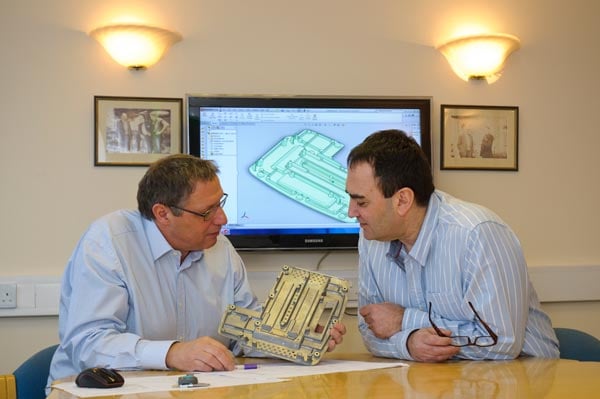
One of the most common misconceptions in product development is that once a design has been created in CAD, the majority of the work is complete. In reality, the engineering phase is often only just beginning.
Transforming a concept into a production-ready component involves numerous activities that extend far beyond design. Material selection, finite element analysis, Design for Manufacture, tooling design, prototype evaluation, dimensional validation, process capability studies and regulatory testing all require time and resources.
For cast aluminium components, the timeline can be significantly influenced by tooling development. Production tooling is not simply a mould. The die must be designed to control metal flow, minimise turbulence, eliminate air entrapment, promote directional solidification and ensure reliable ejection of the finished casting.
Tooling design frequently involves casting simulation software such as MAGMASoft or similar computational modelling systems to predict porosity formation, thermal gradients, fill patterns and solidification behaviour before the metal is ever cut.
Many projects also require multiple prototype iterations before progressing to production tooling. It is not unusual for design modifications to be introduced after physical testing reveals opportunities to improve stiffness, reduce weight, simplify machining or eliminate potential manufacturing defects.
The most successful product developers understand that engineering validation is not a delay: it is an investment in quality, reliability and long-term profitability.
2. Design for Manufacture Should Begin at Concept Stage
A product that performs well in theory is not necessarily a product that can be manufactured efficiently or economically.
Design for Manufacture should be incorporated from the earliest stages of development rather than treated as a final review exercise.
In aluminium high-pressure die casting, component geometry directly influences tooling complexity, cycle time, yield, dimensional repeatability and ultimately production cost. Features that appear simple within a CAD model can become highly problematic during manufacture.
Wall thickness variation is a common example. Sudden transitions between thick and thin sections create uneven cooling rates, increasing the risk of shrinkage porosity, distortion and residual stress. Maintaining consistent wall thickness promotes uniform solidification and significantly improves casting integrity.
Draft angles are equally important. Every vertical surface within a casting requires sufficient draft to enable clean ejection from the die. Insufficient draft increases tool wear, damages castings during extraction and reduces process repeatability.
Parting line location must also be carefully considered. Poorly positioned parting lines can increase flash formation, complicate machining and may impact cosmetic appearance.
A component designed with manufacturing in mind will typically require fewer secondary operations, shorter cycle times, reduced tooling complexity and lower overall production costs.
The earlier these considerations are addressed, the greater the opportunity to optimise both performance and profitability.
Contact us for expert technical advice
3. Research Must Extend Beyond the Market
Market research is important but engineering research is equally critical.
Many new product developers focus exclusively on customer demand while overlooking technical feasibility. The result is often a concept that customers want but manufacturers may struggle to produce.
Before committing to development, it is essential to understand:
-
how similar products are manufactured
-
which materials are commonly used in their manufacture
-
the performance standards expected by the market
-
the cost structures associated with competing solutions.
For cast products, this means understanding why competing components are manufactured using high-pressure die casting, gravity die casting, sand casting, forging, billet machining or fabrication.
Every process has distinct advantages and limitations.
High-pressure die casting offers excellent dimensional consistency, thin wall sections, high production rates and outstanding repeatability. Gravity die casting allows greater section thicknesses, improved mechanical properties through heat treatment and often lower tooling investment. The correct choice depends on production volume, structural requirements, dimensional tolerances and commercial objectives.
Understanding these manufacturing realities early on helps to prevent expensive redesigns later in the project.
Engineering research should answer a fundamental question…
Can the product be manufactured repeatedly, economically and consistently at the quality level demanded by the market?
4. Prototyping Should Validate Engineering Assumptions
A prototype is not simply a visual representation of a product.
Its primary purpose is to challenge assumptions and reveal inconvenient truths.
Every prototype should be designed to answer specific engineering questions regarding performance, durability, ergonomics, manufacturability or assembly.
For cast components, prototyping can take several forms. Early-stage models may use additive manufacturing to validate geometry and fit. More advanced prototypes may be CNC machined from billet aluminium or produced using sand casting to replicate production materials and mechanical properties more accurately.
Testing should focus on measurable outcomes.
Structural components may require load testing, fatigue testing or vibration analysis. Thermal management products may require heat dissipation studies. Pressure-containing components may require leak testing or pressure testing.
Prototype evaluation frequently identifies opportunities to improve rib placement, wall thickness distribution, machining allowances and assembly interfaces.
Failure Modes and Effects Analysis (FMEA) should also be conducted during this phase to identify potential failure mechanisms before production begins.
The objective is not to prove the design is correct.
The objective is to discover where it may fail – when those failures are cheapest to fix.
Contact us for expert technical advice
5. Define Your Production Volume and Scalability Strategy
One of the most important decisions in product development is determining how many units you realistically expect to manufacture – not only during the first year of production, but throughout the product’s entire lifecycle.
Production volume influences almost every engineering and manufacturing decision, from material selection and tooling investment to process selection, automation strategy and quality control requirements. Yet it is frequently overlooked during the early stages of product development.
A component intended for a production run of several hundred units per year may be best suited to CNC machining, fabrication, sand casting or gravity die casting. However, if projected demand increases into the tens or hundreds of thousands of units annually, high-pressure die casting may become significantly more economical despite the higher initial tooling investment.
Understanding these volume thresholds at an early stage allows product developers to select manufacturing processes that remain commercially viable as demand grows.
The implications extend well beyond piece price. Production volume directly affects tooling design, cavity configuration, cycle time expectations and capital investment. A single-cavity tool may be entirely appropriate for lower production volumes, whereas high-volume programmes may justify multi-cavity tooling, automated extraction systems, robotic trimming cells and in-line inspection equipment to maximise throughput and maintain process consistency.
Scalability should also be considered from a design perspective. Components optimised for low-volume manufacture often require design modifications before they can be produced efficiently at higher volumes. Features that are acceptable in machined or fabricated parts may introduce unnecessary complexity when transferred into a die casting environment. Similarly, design characteristics that perform adequately during prototype production may prove difficult to control consistently once manufacturing is scaled up.
For aluminium castings, the choice between gravity die casting and high-pressure die casting is frequently influenced by anticipated production demand. Gravity die casting can offer an attractive solution for medium-volume applications requiring excellent mechanical properties and relatively modest tooling investment. High-pressure die casting, by contrast, is typically justified where production volumes support the tooling costs and where tight dimensional control, high repeatability and rapid cycle times are essential.
A common mistake made by product developers is selecting a manufacturing process solely on the basis of immediate demand forecasts. This can create significant challenges later if market adoption exceeds expectations. Transitioning from one manufacturing process to another often requires redesign of the component, new tooling, revised quality plans and additional validation work. These costs can frequently be avoided through careful planning during the initial development phase.
Scalability extends beyond manufacturing capacity. It also encompasses supply chain resilience, inventory management, quality assurance systems and the manufacturer’s ability to support future growth. Questions such as material availability, tooling maintenance schedules, production lead times and inspection requirements become increasingly important as production volumes increase.
The most successful products are designed not only for launch but for long-term production. By developing a clear understanding of expected volumes and future growth potential from the outset, product developers can make informed engineering decisions that minimise risk, control costs and support sustainable expansion throughout the product’s lifecycle.
6. Your Budget Must Account for Tooling, Quality and Validation
One of the most significant mistakes made during product development is underestimating the true cost of manufacturing.
Component price alone represents only a portion of the total investment.
For cast products, substantial expenditure may be required for tooling design, die manufacture, machining fixtures, gauges, inspection equipment, first article inspection, process validation and quality documentation.
High-pressure die casting tools are precision-engineered assets designed to withstand thousands or potentially hundreds of thousands of production cycles. Tool steel selection, cooling circuit design, cavity configuration and thermal management all influence tooling cost and long-term performance.
In addition to tooling, quality assurance requirements can have a significant impact on project economics.
Critical applications may require dimensional inspection reports, PPAP documentation, material certification, X-ray inspection, CT scanning, pressure testing or statistical capability studies.
Products intended for regulated sectors such as aerospace, medical, defence or automotive often require extensive validation before production approval is granted.
Successful budgeting accounts for the entire manufacturing lifecycle, rather than focusing solely on piece price.
Contact us for expert technical advice
7. Regulatory Compliance and Quality Requirements Must Be Defined Early
Quality cannot be ‘inspected into’ a product after manufacture. It must be built into the design and manufacturing processes rather than relying on catching defects at the end.
Inspections only identify flaws: they don’t fix them.
Every industry has unique requirements that influence design decisions from the outset. Electrical products may require compliance with CE and UKCA regulations. Medical products may involve biocompatibility considerations. Automotive components may require PPAP approval and traceability systems.
For cast components, quality requirements often dictate material selection, manufacturing process choice and inspection methodology.
Dimensional requirements should be clearly defined using recognised Geometric Dimensioning and Tolerancing (GD&T) principles (rather than relying solely on traditional linear tolerancing) – this prioritises the functional fit of parts over raw physical dimensions.
Critical characteristics should be identified early so that tooling, process controls and inspection plans can be developed accordingly.
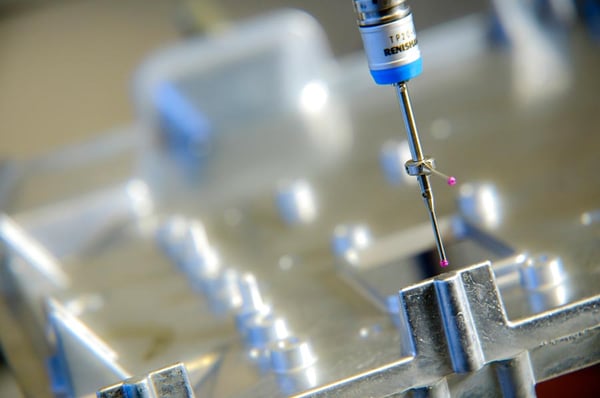
Modern manufacturers increasingly employ Statistical Process Control (SPC), Coordinate Measuring Machines (CMMs), digital inspection systems and process capability analysis to ensure consistent production performance.
Metrics such as Cp (potential capability of a process) and Cpk (actual capability of a process) provide valuable insight into the ability of that process to repeatedly produce conforming components.
Defining these requirements at the beginning of a project prevents costly disputes and redesigns later.
8. Choosing the Right Manufacturing Partner Is a Strategic Decision
The selection of a manufacturing partner extends far beyond obtaining the lowest quotation.
A capable manufacturing partner should contribute engineering expertise throughout the development process, helping to optimise component geometry, material selection, tooling design and production strategy.
When evaluating a casting supplier, consider their technical capabilities – not just their production capacity:
-
Can they provide Design for Manufacture support?
-
Do they use casting simulation software?
-
Can they offer both high-pressure die casting and gravity die casting solutions?
-
Do they possess in-house CNC machining, finishing and assembly capabilities?
-
How do they manage quality assurance and traceability?
-
Can they demonstrate process capability and repeatability?
An experienced manufacturer will identify potential risks before tooling is commissioned and recommend design modifications that improve quality while reducing overall cost.
The most successful projects are rarely based on a traditional customer-supplier relationship.
They are based on engineering collaboration.
By involving your manufacturing partner at the earliest stages of product development, you gain access to expertise that can significantly improve product performance, cut production costs and reduce time to market.
Contact us for expert technical advice
In Summary
Creating a successful product requires far more than a good idea. It demands careful engineering, rigorous validation and a clear understanding of how manufacturing decisions influence quality, performance and cost.
By focusing on manufacturability, material selection, prototyping, tooling strategy, quality assurance and regulatory compliance from the outset, you dramatically increase the likelihood of developing a product that not only functions as intended but can also be manufactured consistently, economically and at scale.
The earlier these considerations are addressed, the smoother the journey from concept to production becomes.
Your Strategic Manufacturing Partner: Why MRT Castings?
Selecting the right manufacturing partner can have a significant impact on the success of a new product. While tooling, materials and production equipment are important, the greatest value often comes from engineering expertise applied during the earliest stages of development.
At MRT Castings, we work closely with product developers, design engineers and procurement teams to help transform concepts into production-ready components. Our involvement often begins long before tooling is commissioned, providing Design for Manufacture guidance that can improve casting quality, reduce production costs and minimise the risk of costly redesigns later in the project.
Our capabilities span both high-pressure die casting and gravity die casting, allowing us to recommend the most appropriate manufacturing route based on component geometry, performance requirements, production volumes and commercial objectives. This process-driven approach ensures that manufacturing decisions are based on sound engineering principles and not a one-size-fits-all solution.
Beyond casting production, we offer a comprehensive manufacturing service that includes tooling development, CNC machining, finishing, assembly and quality assurance. By managing the entire process under one roof, we can maintain tighter control over quality, lead times and component consistency throughout the production lifecycle.
Quality is embedded throughout our manufacturing processes. Through robust process controls, dimensional inspection, material traceability and continuous improvement initiatives, we help customers to achieve the repeatability and reliability demanded by today’s advanced engineering sectors.
Whether you are developing a new product from scratch or seeking to optimise an existing design, our engineering team can provide practical advice and technical support to help you achieve a successful transition from concept to production.
Get Expert Strategic and Technical Advice
Contact us now to discuss your product development requirements.